Ever felt like your marketing dollars are disappearing into a black hole? If you’ve ever run Google Ads for your dental practice and ended up scratching your head at the numbers, you’re not alone. Many dentists spend hundreds or even thousands of dollars monthly, only to wonder if their ads are reaching the right patients, or any at all. Ironically, the more money you pour in, the less control you sometimes feel you have.
But here’s the good news: 2026 brings smarter Google Ads features that can help dentists not only reclaim control but maximize ROI in ways that make every marketing dollar count. From responsive search ads to automated bidding and audience signals, this year is shaping up to be a turning point for online dental marketing.
In this comprehensive guide, we’ll cover everything you need to know to leverage Google Ads effectively, step by step. By the end, you’ll see why investing wisely in digital campaigns isn’t just a luxury-it’s essential for the modern dental practice.
Understanding Google Ads for Dentists
Before diving into the latest features, it’s crucial to understand the foundational principles of Google Ads and why they’re particularly relevant to dental practices.
Google Ads is a pay-per-click (PPC) advertising platform, meaning you only pay when someone clicks your ad. This makes it highly cost-effective compared to traditional media, but only if campaigns are optimized correctly. For dentists, Google Ads is particularly powerful because:
- Local targeting ensures potential patients see your ads in your service area.
- Search intent targets people actively looking for dental services, unlike social media ads that rely on passive interest.
- Trackable ROI provides data on which campaigns generate calls, appointment bookings, and consultations.
Yet without the strategic use of the latest features, your ads can still underperform. 2026 introduces tools specifically designed to boost relevance, efficiency, and conversion.
Responsive Search Ads: Flexibility Meets Performance
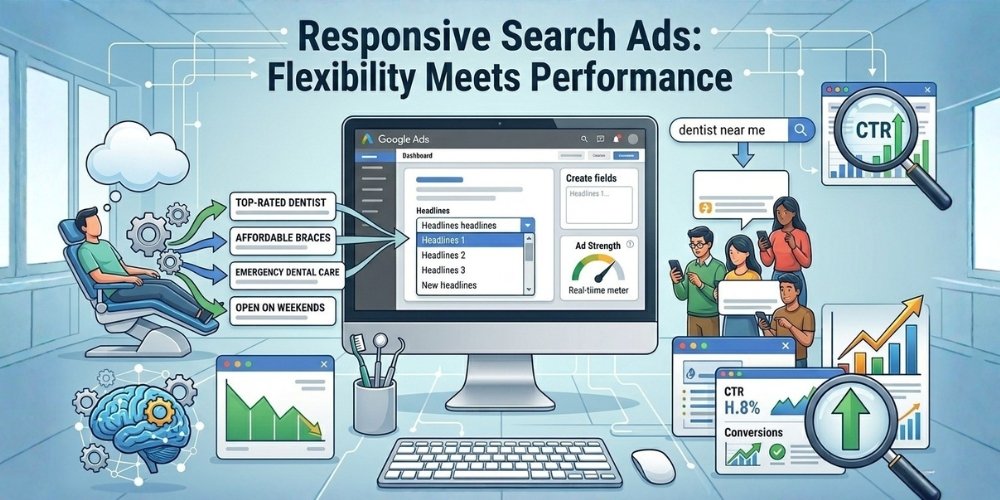
One of the standout features for dentists this year is Responsive Search Ads (RSAs). Unlike traditional text ads that remain static, RSAs allow you to provide multiple headlines and descriptions. Google’s machine learning then tests different combinations to determine which performs best for each search query.
Why RSAs Matter for Dentists
Dental services vary widely, from cosmetic treatments like veneers and teeth whitening to emergency dental care. RSAs allow your ads to adjust messaging based on the patient’s search intent dynamically. For example:
- A person searching for “emergency tooth pain near me” might see an ad highlighting urgent care services.
- Someone interested in “affordable teeth whitening” may see a message emphasizing cosmetic dentistry or financing options.
This flexibility maximizes ad relevance, improves click-through rates (CTR), and ultimately drives more booked appointments.
Best Practices for RSAs
- Provide 15+ Headlines – Include location, services, and benefits. For instance, “Top Rated Dentist in [City]” or “Same-Day Appointments Available.”
- Use 4+ Descriptions – Offer different angles, such as affordability, experience, and patient comfort.
- Include Keywords Naturally – Use local keywords such as “[City] dental clinic” to improve ad quality scores.
- Pin Strategically – Pin essential headlines like your practice name to maintain brand visibility while allowing Google to optimize other headlines dynamically.
Studies show that RSAs can increase CTR by 10-15% compared to standard text ads, making them a must-have feature for modern dental campaigns.
Automated Bidding: Smarter Spending, Better ROI
Manual bidding can feel like guesswork, especially if you’re juggling multiple ad groups and services. Automated bidding, powered by Google’s AI, removes much of the guesswork and optimizes your bids for conversions or target ROAS (Return on Ad Spend).
Types of Automated Bidding for Dentists
- Maximize Conversions – Google automatically sets bids to get the most conversions within your budget. Ideal for practices with consistent appointment traffic.
- Target CPA (Cost Per Acquisition) – Helps maintain a predictable cost per patient acquisition. You define your target, and Google adjusts bids to achieve it.
- Target ROAS – Focuses on revenue generated from each conversion. Useful for high-ticket procedures like dental implants.
Benefits for Dental Practices
- Time Savings – Reduces manual monitoring and bidding adjustments.
- Better ROI – AI uses historical data and contextual signals to make smarter bid decisions.
- Scalability – Easily manage multiple campaigns, from preventive care to cosmetic dentistry.
Pro tip: Pair automated bidding with RSAs. The combination allows Google Ads to test messaging while optimizing bids for the audience most likely to convert.
Audience Signals: Reaching the Right People
Even the best ad creative won’t perform if it reaches the wrong audience. That’s where audience signals come in. They allow dentists to inform Google’s machine learning about which users are most likely to convert.
How Audience Signals Work
Audience signals are data sets you provide to Google Ads. They can include:
- Custom Audiences – Based on search history, website interactions, or specific demographics.
- In-Market Audiences – Users actively researching dental services.
- Remarketing Lists – People who have visited your site but haven’t booked an appointment.
Advantages of Using Audience Signals
- Precision Targeting – Ensures your ads reach potential patients ready to book services.
- Lower Wasted Spend – Reduces clicks from users unlikely to convert.
- Enhanced Learning – Provides Google’s AI with better signals for automated bidding and RSAs.
For example, targeting an in-market audience searching for “pediatric dentist near me” allows your practice to focus marketing spend on families in need of children’s dental care, rather than general web users.
Structuring Campaigns for Maximum ROI
Now that you understand the key features, the next step is structuring campaigns strategically. A poorly structured campaign can waste budget and reduce performance, even with RSAs and automated bidding.
Step 1: Organize by Service Type
Separate campaigns by service: cosmetic dentistry, orthodontics, emergency care, etc. This enables targeted ad messaging, audience signals, and bidding strategies that align with patient intent.
Step 2: Use Ad Groups for Granular Targeting
Within each campaign, create ad groups focused on specific procedures or keywords. For instance, under cosmetic dentistry, you might have ad groups for:
- Teeth whitening
- Veneers
- Dental implants
This ensures ads are hyper-relevant and increases Quality Scores, which reduces cost per click (CPC).
Step 3: Incorporate Location Targeting
Dentists rely on local patients, so leveraging geographic targeting is critical. Target cities, zip codes, or even a radius around your practice to ensure only potential patients see your ads.
Step 4: Include Ad Extensions
Ad extensions boost visibility and CTR by providing additional information. Essential extensions for dentists include:
- Call Extensions – Allows users to call directly from the ad.
- Location Extensions – Highlights your address and maps directions.
- Sitelink Extensions – Promotes booking pages, services, or promotions.
Tracking Conversions and Measuring Success
ROI isn’t just about clicks; it’s about measurable patient actions. Google Ads provides conversion tracking to capture data on phone calls, appointment form submissions, and even online chat interactions.
Key Metrics to Monitor
- Cost Per Conversion – Measures the efficiency of ad spend.
- Click-Through Rate (CTR) – Indicates how compelling your ad copy is.
- Impression Share – Shows how often your ads appear for target keywords.
- Quality Score – A Google metric assessing relevance, CTR, and landing page experience.
Optimizing Campaigns
- Use A/B testing with RSAs to continually refine messaging.
- Adjust audience signals based on performance data.
- Regularly monitor automated bidding outcomes to ensure cost-efficiency.
With proper tracking and adjustments, dentists can see measurable increases in appointments, patient inquiries, and ultimately revenue, while reducing wasted ad spend.
Leveraging Multimedia and Video in Google Ads
2026 also emphasizes multimedia assets in search campaigns. Dentists can now include videos directly in responsive search ads or on YouTube campaigns connected to Google Ads.
Why Video Matters
- Videos humanize your practice and build trust.
- Patients are more likely to engage with visual explanations of procedures.
- Video can increase conversion rates by demonstrating outcomes, such as teeth whitening results or dental implant procedures.
Practical Strategies to Maximize ROI in 2026
To summarize, here are actionable strategies for dentists to maximize Google Ads ROI this year:
- Deploy Responsive Search Ads with at least 15 headlines and 4 descriptions for each campaign.
- Enable Automated Bidding targeting conversions or ROAS, saving time and optimizing spend.
- Use Audience Signals to focus marketing on potential patients actively searching for dental care.
- Structure Campaigns by service type and geographic relevance.
- Incorporate Video and Multimedia Assets to increase engagement and trust.
- Monitor Key Metrics like cost per conversion, CTR, and Quality Score.
- Continuously Optimize using A/B testing and data-driven adjustments.
By integrating these strategies, dentists can turn Google Ads into a consistent source of new patients and practice growth.
How Digital Presence Matters Helps Dental Practices
While the tools and strategies above can seem overwhelming, you don’t have to navigate them alone. Digital Presence Matters specializes in helping dental practices not only run effective Google Ads campaigns but also build an integrated online presence.
Our Services Include:
- Video Creation – Professionally produced videos that showcase your practice and procedures.
- Social Media Marketing – Engaging campaigns to build trust and visibility across platforms.
- Digital Advertising – From Google Ads to display and retargeting campaigns.
- SEO & Content Marketing – Optimizing websites and content to attract local patients organically.
- Branding & Website Enhancement – Creating cohesive, visually appealing digital identities.
By combining these services, we ensure that every dollar spent on advertising translates into measurable patient growth. Whether it’s crafting high-performing RSAs, managing automated bidding, or producing attention-grabbing videos, Digital Presence Matters is committed to maximizing ROI for dentists in 2026 and beyond.
Client Impact
- Increased patient inquiries and appointment bookings.
- Optimized ad spend and higher ROI on marketing campaigns.
- Enhanced brand visibility and trust in local communities.
Our approach integrates cutting-edge Google Ads features with a full digital marketing strategy, giving dental practices a competitive edge without the trial-and-error stress.
Remember
- Test and Optimize Continuously – Even the best campaigns benefit from A/B testing and regular optimization.
- Focus on Audience Relevance – Target the patients most likely to convert to maximize ROI.
- Leverage Multimedia Content – Videos, images, and creative messaging boost engagement and trust.
Disclaimer
All insights provided in this blog are intended for informational and marketing purposes only. They should not be interpreted as professional financial, legal, or medical advice. Always consult with qualified professionals before making strategic business decisions.
For dental practices ready to maximize ROI in 2026, contact Digital Presence Matters today:
📧 Info@digitalpresencematters.com
📞 (925) 940-0705