Ever tried to find a dentist online and ended up scrolling through a list of outdated websites that looked like they were designed in 2003? Frustrating, isn’t it? You’re not alone. The truth is, if your dental practice isn’t keeping up with Google’s algorithm updates, you might as well be invisible. And invisibility in today’s digital world? That’s a fast track to fewer patients walking through your doors.
Google updates its search algorithm hundreds of times each year. Most of them are minor tweaks, barely noticeable. But every now and then, a major update shakes the digital landscape, forcing dental practices to rethink their online strategies. If you’re wondering what this means for your website, patient engagement, and overall growth, you’ve come to the right place. In this blog, we break down Google’s latest algorithm update and outline practical steps dental practices can take to thrive-not just survive-in the digital age.
Understanding Google’s Latest Algorithm Update
Google’s algorithm isn’t some mysterious force; it’s a set of rules and signals designed to rank websites in search results. The latest update focuses on user experience, mobile performance, and content relevance, which are crucial for dental practices looking to attract new patients.
Core Changes
- User Experience (UX) Signals – Google is now prioritizing websites that deliver a seamless experience. This includes intuitive navigation, clear calls-to-action, and minimal clutter. Websites that confuse visitors or make information hard to find may see a drop in rankings.
- Page Speed – Slow-loading websites are penalized. In dentistry, where patients often research procedures, location, and reviews online, a slow site can mean losing prospective patients to competitors with faster pages.
- Mobile-First Indexing – Mobile usage dominates search traffic. Google now indexes mobile versions of websites first. If your mobile site is poorly designed or lacks functionality, your rankings could take a hit.
- Content Quality & E-A-T – Expertise, Authoritativeness, and Trustworthiness (E-A-T) are more important than ever. Informative blog posts, educational content, and clear explanations about procedures can improve your site’s credibility and visibility.
- Core Web Vitals – Google evaluates loading performance, interactivity, and visual stability. Sites with layout shifts, slow interactivity, or delayed loading may suffer in rankings.
Why This Matters for Dental Practices
Dental practices face unique challenges in digital marketing. Unlike e-commerce sites, your goal isn’t just clicks-it’s converting online visitors into booked appointments. Google’s latest update directly affects this conversion pipeline.
Patient Decision-Making
Patients rely on online research to choose a dentist. Poor UX or slow-loading pages can lead them straight to your competitors. By optimizing your website according to the new algorithm, you ensure that your practice is the first choice when patients search for services like teeth whitening, root canals, or cosmetic dentistry.
Local SEO Implications
Most dental searches are local: “dentist near me” or “best pediatric dentist in [city].” Google now weighs user experience heavily in local search rankings. Practices with high-quality websites and mobile-friendly designs are more likely to appear in local search results, Maps listings, and “near me” queries.
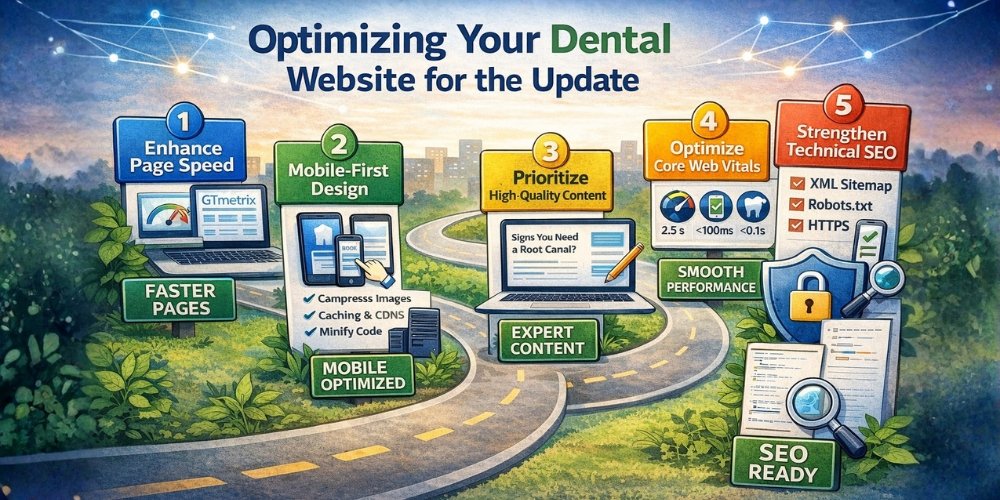
Optimizing Your Dental Website for the Update
Here’s a practical roadmap to align your dental website with Google’s new priorities.
1. Enhance Page Speed
- Audit Your Site: Tools like Google PageSpeed Insights or GTmetrix identify slow-loading pages.
- Optimize Images: Compress images without sacrificing quality. Large dental images of X-rays or before-and-after smiles can slow your site.
- Leverage Caching & CDNs: Reduce server response times and deliver content faster to users.
- Minify Code: Simplify CSS, JavaScript, and HTML to reduce load times.
Benefit: Faster pages reduce bounce rates and increase patient engagement. According to research, even a one-second delay in load time can lower conversions significantly.
2. Mobile-First Design
- Responsive Layouts: Ensure your website adapts seamlessly across devices.
- Clickable Buttons & Easy Navigation: Make it simple for patients to book appointments on mobile.
- Mobile Content Formatting: Avoid long paragraphs; use headings, bullet points, and concise content for easy scanning.
Benefit: A mobile-optimized site ensures you capture the growing number of patients researching dental services on their phones.
3. Prioritize High-Quality Content
- Educational Blogs: Topics like “How to Prevent Cavities” or “Signs You Need a Root Canal” demonstrate expertise.
- Procedure Pages: Clearly explain treatments, expected outcomes, and FAQs.
- Patient Reviews & Testimonials: Include structured data markup to enhance trustworthiness.
Benefit: High-quality content signals authority to Google, improving rankings and attracting patients who trust your expertise.
4. Optimize Core Web Vitals
- Largest Contentful Paint (LCP): Aim for pages that load primary content within 2.5 seconds.
- First Input Delay (FID): Ensure interactivity responds in under 100 milliseconds.
- Cumulative Layout Shift (CLS): Minimize visual shifts caused by images or ads loading unexpectedly.
Benefit: A smooth, stable website improves user experience, reduces frustration, and keeps patients engaged.
5. Strengthen Technical SEO
- Structured Data: Implement schema markup for dental practices, including office hours, services, and reviews.
- XML Sitemap & Robots.txt: Make sure Google can crawl and index all relevant pages.
- Secure Website: HTTPS is essential for patient trust and search rankings.
Benefit: Technical optimizations make your site more visible, ensuring Google can understand and rank your pages accurately.
Leveraging Content Marketing to Complement SEO
While technical optimization is essential, content marketing amplifies your visibility and credibility.
Blogging & Patient Education
- Focus on long-tail keywords like “affordable cosmetic dentist in [city]” or “pediatric dentist for toddlers.”
- Create content that answers common patient questions.
- Update existing blog posts to reflect the latest dental guidelines or trends.
Benefit: Blogging improves search rankings and positions your practice as an authoritative voice in your community.
Video Marketing
- Procedure Walkthroughs: Short videos explaining common treatments reduce anxiety and build trust.
- Patient Testimonials: Capture authentic feedback on your services.
- Social Media Clips: Share educational tips or office highlights on platforms like Instagram, TikTok, and Facebook.
Benefit: Videos engage patients visually and emotionally, often increasing appointment bookings.
Local & Social Media Optimization
- Maintain consistent NAP (Name, Address, Phone) across all platforms.
- Engage with local directories and community forums.
- Encourage satisfied patients to leave reviews on Google and social media.
Benefit: Strong local presence combined with positive reviews improves your visibility in “near me” searches.
Actionable Strategies for Immediate Impact
If you’re looking for quick wins to align with Google’s update, here are steps that can deliver results in weeks, not months:
- Audit Website Speed & Mobile Performance – Use free tools to identify critical issues.
- Revamp Core Pages – Ensure homepage, services pages, and contact pages load fast and look professional on mobile.
- Update Content – Refresh old blog posts with current information, images, and videos.
- Implement Schema & Structured Data – Highlight your services, hours, and reviews for Google.
- Engage Patients Online – Collect reviews, respond to feedback, and post helpful social media content.
These strategies are not theoretical-they directly address the signals Google prioritizes, helping your practice remain competitive.
Measuring Success Post-Update
Optimizing for Google’s algorithm is only part of the process. Tracking results ensures your efforts pay off.
Key Metrics to Monitor
- Organic Search Traffic: Are more potential patients finding your website?
- Bounce Rate & Dwell Time: Are visitors staying and engaging with your content?
- Mobile vs. Desktop Performance: Are mobile users experiencing smooth navigation?
- Conversion Rates: Are visitors booking appointments or calling your office?
- Local Search Rankings: Are you appearing in top results for “dentist near me” queries?
Benefit: Data-driven monitoring allows you to tweak strategies and maintain strong rankings as Google continues to evolve.
The Role of Digital Presence Matters in Your Online Strategy
Keeping up with Google’s algorithm updates is one thing; executing a full-scale digital strategy is another. That’s where Digital Presence Matters steps in.
We specialize in helping dental practices navigate the complex digital landscape with tailored solutions that drive real results. Our services include:
- Video Creation – Engaging patient education videos, procedure walkthroughs, and testimonials that boost trust and conversions.
- Social Media Marketing – Strategic campaigns across Instagram, Facebook, TikTok, and LinkedIn to reach the right audience.
- Digital Advertising – Targeted ads on Google and social platforms to capture local leads and drive appointments.
- SEO Optimization – Comprehensive audits, on-page optimization, content strategy, and technical SEO tailored to dental practices.
- Branding & Website Enhancement – Modern, mobile-first websites designed to impress visitors and encourage bookings.
With a full-spectrum approach, we ensure your practice not only complies with Google’s algorithm but thrives in search rankings, attracts new patients, and builds lasting credibility.
Contact us today at info@digitalpresencematters.com or call (925) 940-0705 to transform your dental practice’s digital presence.
Benefits of a Strong Digital Strategy for Dental Practices
When you align with Google’s latest priorities, the benefits extend far beyond search rankings:
- Increased Visibility – More patients find your practice online.
- Enhanced Patient Trust – High-quality content and professional websites foster credibility.
- Better Patient Engagement – Interactive websites, blogs, and videos keep patients informed and connected.
- Higher Conversion Rates – Mobile-optimized, fast-loading pages encourage appointments and inquiries.
- Long-Term Growth – Sustained SEO and marketing strategies ensure your practice remains competitive.
By addressing speed, mobile UX, content quality, and local SEO, your dental practice becomes more than a search result-it becomes the first choice for patients seeking care.
Remember
- Optimize for Users First: Google rewards websites that prioritize the visitor experience. Fast, intuitive, and informative pages convert best.
- Invest in Quality Content: Educational blogs, videos, and FAQs not only improve rankings but build patient trust.
- Monitor and Adapt: Digital marketing is dynamic. Track metrics, test strategies, and update content regularly to stay ahead.
Disclaimer
The insights shared in this blog are intended for informational and marketing purposes only. They are not professional dental or legal advice. Practices should consult qualified professionals for guidance specific to their circumstances.